Both sides of every door and drawer front, the face frames and the cabinet sides you can see from the room: those are painted in a normal cabinet job. The insides of the cabinets and the shelves usually are not, and in most kitchens that is the right call. The rest of this guide goes surface by surface, so when you ask for a quote you can say exactly what you want included.
The cabinet run, surface by surface
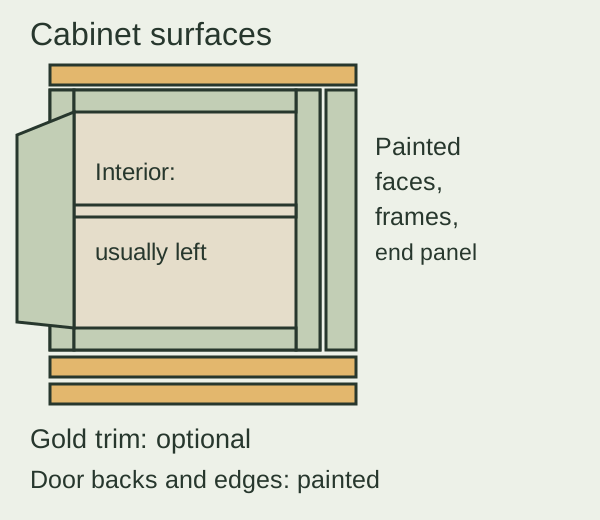
| Surface | Usually | Why |
|---|---|---|
| Door fronts and drawer fronts | Painted | It is what you see |
| Door backs and edges | Painted | You see them every time a door opens |
| Face frames | Painted | The grid the doors hang on |
| Exposed end panels | Painted | The sides you see from the room |
| Toe kicks | Optional | Low, scuffed and often dark already |
| Crown and light rail | Optional | Depends on whether they match the cabinets now |
| Cabinet interiors and shelves | Usually left | Lots of surface, little visible change |
| Drawer boxes | Usually left | Often a different material from the fronts |
Door backs and edges
The back of a door is visible every time it opens, and the edges are visible all the time from the side. A painted front with a stained back looks unfinished the first time a guest opens the glasses cabinet, so door backs and edges are part of a normal cabinet job. The same goes for drawer fronts: the face, the edges and the back of the front, but not the drawer box behind it.
Face frames and the strip you see when a door is open
The face frame is the grid of wood around the openings, and it is painted along with the doors. Look closely when you open a door and you will see the inside edge of the frame, a strip an inch or so deep. That strip is painted too, because it shows. Behind it is the line where the painted frame meets the unpainted interior, and a clean, straight line there is what makes an unpainted interior look intentional.
Interiors and shelves
Cabinet interiors are usually left in their original finish, and for most kitchens that is fine. The inside of a cabinet is mostly hidden behind plates and cans, the surface area is large, and shelves take a beating from dishes being slid in and out. Painting all of it adds cost for very little visible change.
Painting the interior does make sense in a few places:
- Glass-front cabinets, where the inside is on display.
- Open shelving, where there is no door at all.
- A cabinet you use for display, such as a hutch top or a corner cabinet with lighting.
If you want interiors painted, list which cabinets in your quote request. It is usually better to choose a few than to do them all.
Drawer boxes
Drawer boxes are rarely painted. Many are a different material from the cabinets, such as melamine, prefinished plywood or particleboard with a paper finish, and paint on the sides of a drawer box rubs every time it opens and closes. The drawer front is what changes the look.
End panels, toe kicks, crown, light rail and fillers
- End panels: The flat sides at the end of a cabinet run, including the side of the fridge cabinet and the back of the island. If you can see it from the room, it is normally painted.
- Toe kicks: The recessed strip at the floor. They get kicked, mopped and scuffed. Some homeowners paint them to match, others want them dark so scuffs don't show.
- Crown molding on top of the uppers, and light rail under them: painted to match if they are part of the cabinets now. If the crown is a different color from the cabinets on purpose, decide whether that still works with the new color.
- Fillers: The narrow strips between cabinets and walls or appliances. Painted with the face frames.
Things beside the cabinets
Some pieces next to the cabinets look like part of them, and leaving them in the old finish stands out once everything else is painted. Mention each one in your quote request:
- A wood range hood cover above the stove.
- Panels on a dishwasher or fridge that match the cabinet doors.
- A desk or built-in nook at the end of the counter.
- The pantry door, if it is a cabinet-style door rather than an interior door.
- A bar or beverage cabinet in the dining room built to match the kitchen.
Glass-front and open cabinets
Glass-front doors are painted like any other door, with the glass covered. The muntins, the thin bars between panes, take more time than a plain door, which can show up in a quote. Behind the glass, the interior and shelves usually should be painted, or at least considered, because they are what you see.
How to describe the scope when you ask for a quote
You will get a more accurate quote if you say what you want up front:
- Your door and drawer front count. Our cost guide shows how to count.
- Which interiors, if any, you want painted.
- Whether the toe kicks, crown and light rail should match.
- Every extra piece: hood cover, appliance panels, desk, pantry door.
- Whether you are changing hardware. Our hardware and hinges guide explains why that matters before primer.
For what a finished kitchen includes, see Leavenworth kitchen cabinet painting.
Send us your scope
Photos plus a short scope list is all we need for a written quote.